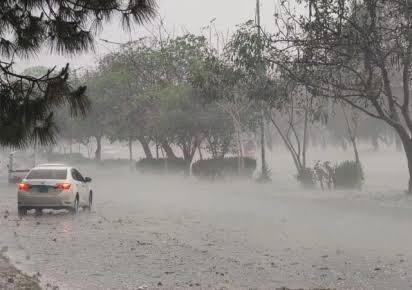
Are you planning to travel to northern Pakistan this season — Swat, Gilgit, Murree, or Azad Kashmir? Before you book that trip, there is something happening right now that could change everything. Not a rumor. Not an overreaction. A humanitarian situation confirmed by NDMA, Relief Web, and Islamic Relief Pakistan — and it deserves your full attention for the next two minutes.
Pakistan's 2026 Monsoon Has Already Taken 180 Lives
According to the National Disaster Management Authority (NDMA), from June 26 to September 3, 2026, monsoon-related incidents across Pakistan caused 180 deaths and 509 injuries. That number was already climbing before the second week of September even began. D. I. Khan New City
Khyber Pakhtunkhwa recorded the highest deaths at 74, followed by Punjab with 61, Sindh with 17, and Azad Jammu and Kashmir with 16. These are not remote, uninhabited areas. These are the exact routes that thousands of Pakistani travelers and tourists use every summer. D. I. Khan New City
What makes these numbers harder to read is that 82 of the 180 recorded deaths were children. D. I. Khan New City
Roads, Bridges, Homes — Gone
The damage is not just statistical. It is physical, structural, and it affects how you travel.
NDMA recorded 589 completely destroyed homes and 1,127 partially damaged homes, with Gilgit-Baltistan alone accounting for 535 damaged houses and 910 livestock losses, while Khyber Pakhtunkhwa recorded 380 damaged houses. D. I. Khan New City
Homes, roads, bridges, schools, and public infrastructure have suffered widespread damage. Authorities continue to issue flood alerts as additional rainfall is expected in vulnerable areas. That means road closures, washed-out highways, and cut-off villages are not a worst-case scenario. They are already happening. IR Pakistan
If you had a northern trip planned for September or October, the routes through KP and GB may not be what Google Maps shows you right now.
Why This Year Feels Different
Here is what separates 2026 from a "normal" monsoon season.
The current emergency is unfolding while many communities are still recovering from the devastating 2025 floods, which killed more than 1,037 people and displaced approximately 2.9 million at the peak of the disaster. Families that spent the past year rebuilding their homes are watching those same walls collapse again. The Watchers
Pakistan ranks 18th among 191 countries in the INFORM Risk Index because of its high exposure to natural hazards, vulnerability, and limited coping capacity. Disaster-related losses have exceeded USD 18 billion over the past decade. The Watchers
The 2025 floods left a mark on those people, and just as they were beginning to rebuild their lives, another monsoon has started taking away their homes, livelihoods, crops, and sense of security. The cycle is exhausting — and this year, the ground was already soft. IR Pakistan
What This Means If You Are Traveling or Planning To
This is not a call to cancel Pakistan forever. This country is extraordinary, and its northern landscapes deserve to be on every bucket list. But right now, in September 2026, here is what you need to do.
Check the NDMA emergency helpline before any northern trip: 051-111-157-157, available 24 hours a day. Avoid low-lying river areas and narrow mountain valleys during active rain spells. Keep your travel flexible — booked tours into KP, Swat, or GB may face route changes with zero notice. And if you have family in flood-affected areas, check on them. Not tomorrow. Now.
Pakistan's disorganized urban planning, a result of rapid rural-to-urban migration, has led to sprawling slums that are particularly vulnerable to flooding. Even city travel to Lahore, Peshawar, or Karachi carries risk during heavy rainfall spells this month. Al Jazeera
Your Next Step
If you have a trip to Pakistan planned for September or October 2026, contact your travel agent today and ask directly about current road access and accommodation status in your destination. At Blue Sky Travels and Tours, we monitor these situations in real time and can help you reroute, reschedule, or hold your booking until conditions stabilize. Do not guess. Do not rely on photos from last year. The ground situation changes week by week right now — and we are here to keep you one step ahead of it. Reach out to us before you make your next move.